Crypto continues to attract attention across Ghana as more people explore Bitcoin, stablecoins, and digital assets for saving, trading, remittances, and online opportunities. One question, however, keeps coming up:
Is crypto legal in Ghana?

The short answer is yes, crypto is not banned in Ghana, but it is now entering a new regulated era after major recent developments involving Parliament and the Bank of Ghana.
That means the answer in 2026 is stronger and clearer than before.
Newest Crypto Development
Ghana has taken one of its biggest steps yet toward regulating digital assets after Parliament passed the Virtual Asset Service Providers Act, 2025 (Act 1154).
The new law creates a framework for supervising and licensing virtual asset businesses operating in Ghana.
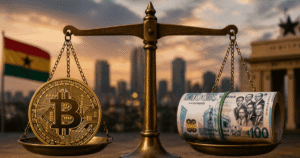
At the same time, the Bank of Ghana has established a dedicated Virtual Assets Regulatory Office (VARO) to help oversee the sector.
This marks a major shift from uncertainty toward formal regulation.
So, Is Crypto Legal in Ghana?
Yes, crypto activities such as buying, holding, and using digital assets are not broadly banned in Ghana.
However, crypto is not legal tender like the Ghana cedi.
The cedi remains Ghana’s official currency for domestic transactions.
What has changed is that crypto-related businesses are now moving under clearer regulation.
That means exchanges, service providers, and other operators may now need registration, licensing, or compliance depending on the activity involved.
What the New Law Means
The new framework is important because it can help:
- improve consumer protection
- reduce scams and fraud
- bring more transparency
- attract serious fintech players
- strengthen anti-money laundering oversight
- increase confidence in the sector
For years, many people asked whether Ghana would regulate crypto. That process has now moved forward significantly.
Can Ghanaians Still Buy Bitcoin?
Yes. Many Ghanaians continue to access Bitcoin, Ethereum, XRP, USDT, and other digital assets through wallets, exchanges, and peer-to-peer channels.
The difference now is that Ghana is building a system to supervise the industry more formally.
That could make the market safer over time.
Important Risks Still Remain
Even with regulation progressing, crypto still carries risk.
1. Price Volatility
Prices can rise or fall quickly.
2. Scams
Fake investment platforms still exist.
3. Wrong Platforms
Not every service claiming legitimacy is approved.
4. User Errors
Lost passwords or sending funds wrongly can lead to losses.
What Smart Ghanaians Should Do Now
- Use trusted platforms only
- Follow official updates from regulators
- Avoid guaranteed profit promises
- Enable two-factor authentication
- Start small if learning
- Keep records of transactions
Why This Story Matters
Ghana’s latest steps show that digital assets are no longer being treated as a fringe topic.
The country is moving toward a structured crypto environment, which could support innovation, jobs, fintech growth, and stronger oversight.
Final Verdict
Yes, crypto is legal to access and use in Ghana, but it is now entering a more regulated phase.
That means the future of crypto in Ghana may be more formal, safer, and better supervised than before.
For users, this is a major development worth watching closely.
You May Have Missed