OPINION
Founder, EduTechGhana.com | Education & Technology Analyst
Published: March 27, 2026

We Are Putting Children Online Without Protecting Their Data And That Is Dangerous

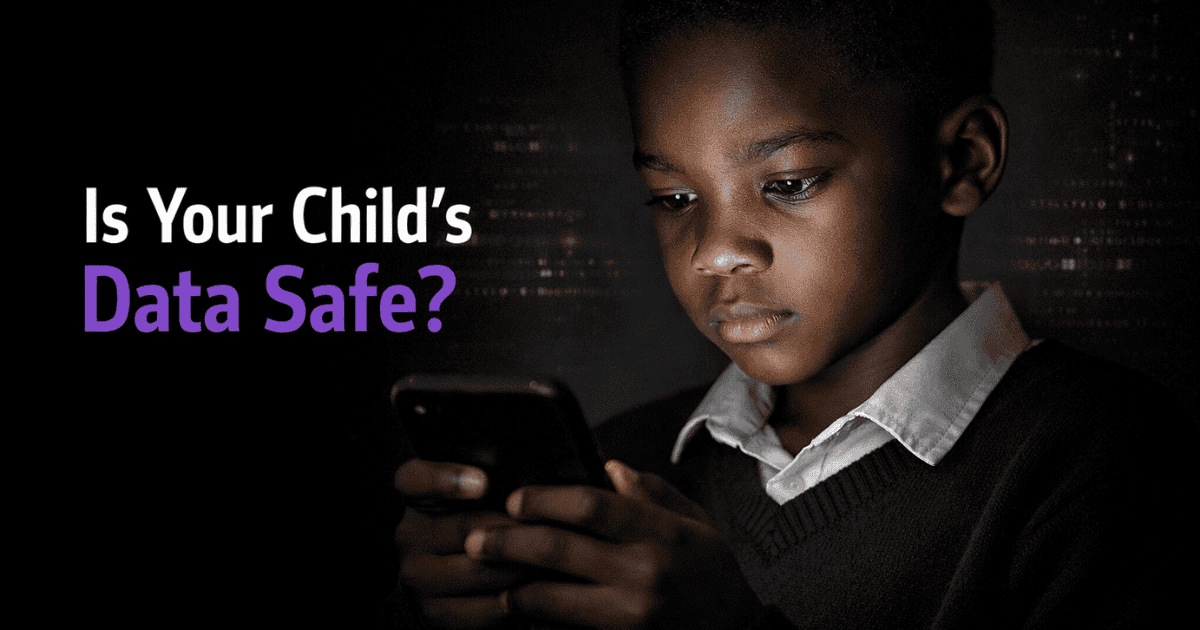
Ghanaian child using a smartphone highlighting concerns about children data protection

As more Ghanaian children use phones, apps, and online platforms for learning, a hidden risk is growing, especially in how their data is collected and used.

Key Takeaways
  • Many children in Ghana use phones and apps mostly at home
  • Their data is collected, often without awareness
  • Most users do not read privacy policies before agreeing
  • Data protection awareness among teachers and parents is still low
  • Simple steps can reduce the risks
The Reality Today

In my experience as a teacher, digital learning is not the same across all schools.

In most public basic schools, structured digital platforms are not widely used in the classroom. Apart from official data collected at the school level, which is usually entered by headteachers and administrators for use by the Ghana Education Service and the Ministry of Education for planning and decision making, many learners are not directly interacting with formal digital systems during school hours.

However, that does not mean children are offline. Many of the learners I interact with are already using digital tools outside the classroom. They access them through their parents’ phones, their own smartphones or tablets, or other shared devices. This is where most of the exposure is happening.

A Common Situation I See Often

After school, a child is given a phone or picks up their own device to practise. They search for past questions or download a learning app.

To continue, they are asked to enter their name, select their class, and create an account. Within minutes, they are learning, but at the same time, their data is being collected. In many cases, neither the child nor the parent fully understands what happens to that data.
Also, in most situations, the Agree button is clicked without reading the privacy policy. From what I have observed, this is not limited to children. Many children do not read it, many parents do not read it, and even teachers often do not read it before recommending or using a platform. The focus is usually on getting access quickly, not on understanding what is being agreed to.

In effect, we are agreeing to terms we do not understand on behalf of children who cannot fully understand them either.

It Doesn’t Stop at Registration

As the child continues using the platform, their answers are recorded, their progress is tracked, and their behaviour is analysed. Over time, the system builds a profile of the learner based on their activity.

This may improve learning, but it also means the child is being monitored continuously. In many cases, this happens without clear awareness or informed consent from either the child or the parent.

The Situation in Private Schools

From what I have observed, many private basic schools are more structured in their use of digital tools. Some schools use school management systems, learning platforms, and online assignment tools.

Students may be required to submit assignments online, access materials digitally, and communicate through these platforms. This means children in such schools are exposed to data collection both in school and at home. While this supports learning, it also increases the importance of proper data protection practices.

The Hidden Risk in Free Platforms

Many of the platforms children use are free, which is why they are widely accepted by both parents and schools. However, in many cases, data becomes the exchange.

Some platforms may store personal information without strong safeguards, share data with third parties, or use activity data for profiling or targeted content. It is important to note that not all data collection is harmful, especially when it is properly managed and regulated.

The concern arises when data practices are not clear, not transparent, or not properly controlled.

Ghana Has a Law But Awareness Is Low

Ghana has the Data Protection Act 2012 (Act 843). However, awareness and enforcement remain limited.

From what I see, many teachers were not trained in data protection practices until recently, largely due to continuous professional development, but this remains inadequate, while many parents are not aware of how platforms use data and schools may not fully evaluate digital tools before use. This creates a gap between technology use and data protection practice.

Why This Should Concern Us

Children do not fully understand what it means to share their data online, yet they are the ones using these platforms the most.

From what I see, many children sign up for apps and websites without thinking twice. They enter their names, their age, and other details, just to access learning content. Once that information is out there, it cannot be taken back.

If their data is not properly protected, the consequences can be serious. A child’s personal information can be exposed to strangers, their online activity can be tracked over time without their knowledge, and their identity can be misused in ways they may never fully understand.

In some cases, this data can persist for years, shaping what they see online, how they are targeted, and how they are represented digitally.

The most worrying part is that they are not choosing this with full awareness. We are choosing it for them.

This is not just about technology. It is about trust. Children trust us to guide them, and they trust the systems we allow them to use. If we fail to protect their data now, we may be exposing them to risks that extend far beyond the classroom.

What Should Be Done

Awareness alone is not enough. There are simple and practical steps that can be taken immediately.

Schools

Check platforms before recommending them. Find out what information the platform collects and how it is used.

Avoid unnecessary data requests. Students should not be required to provide more information than needed to access learning content.

Use platforms that allow limited access where possible. Choose tools that do not require full account registration.

Guide students before use. Take a few minutes to explain what information they should and should not share online.

Parents

Ask one simple question before any sign up. Why does this app need this information.

Assist younger children during registration. Children should not create accounts alone.

Use minimal information. Avoid entering full names, exact dates of birth, or unnecessary personal details where possible.

Check app permissions. Look at what the app is accessing such as location or contacts and disable what is not needed.

Teachers

Review tools before recommending them. Do not rely only on popularity or convenience.

Avoid forcing sign ups without explanation. If students must register, explain what they are agreeing to.

Encourage safe practices. Remind students not to share personal details carelessly online.

Government and regulators

Provide a list of approved digital learning platforms for schools.

Develop simple data protection guidelines specifically for basic schools.

Train teachers on basic digital safety and data protection.

Increase public awareness through schools and media.

Final Thought

From what I see every day, children in the country are already online.

Some use their parents’ phones, some use their own devices, and others use systems provided by their schools. The platforms may differ, but the risk remains the same.

Are we protecting their data while they are there?

Leave a Comment

Your email address will not be published. Required fields are marked *